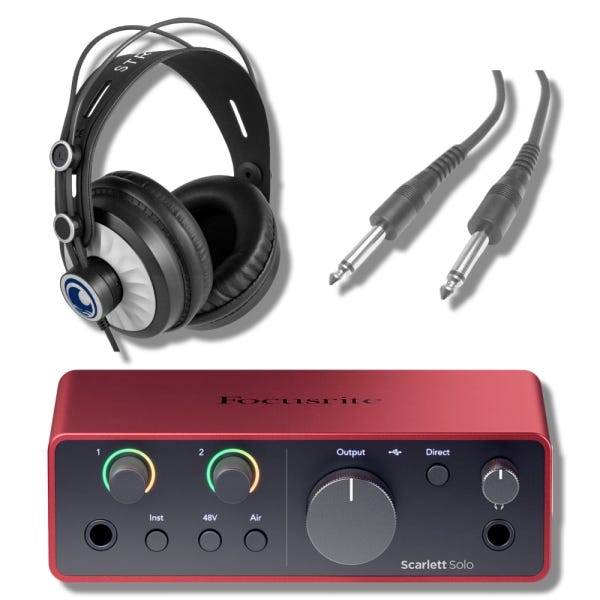
24-Bit/192kHz A/D Conversion, -127dBu EIN Preamp, 57 dB Gain Range, 120 dB Dynamic Range, Air Mode with Presence + Harmonic Drive, Dynamic Gain Halos, Hi-Z Instrument Input, Loopback for Streaming, Bus-Powered USB-C, Combo XLR/TRS Input, 2 Balanced 1/4″ Outputs, Custom Headphone Amp, Focusrite Control 2 + Hitmaker Expansion, 3-Year Warranty, 50mm Closed-Back Drivers, 15Hz–25kHz Frequency Response, 32Ω Impedance, 90° Fold-Flat Earcups, Steel Headband + Plush Circumaural Cushions, Soft Carry Bag + 1/4″ Adapter, 25-Foot Balanced XLR Male-to-Female, 3-Pin Twisted-Pair Shielded Conductors, Metal XLR Shells
This bundle is built for the home and project studio recordist who needs the audio interface, monitoring headphones, and a long-run microphone cable in one purchase — without compromising on the components. The Focusrite Scarlett Solo (4th Gen) is the hero — a single-channel USB-C audio interface with a -127 dBu EIN combo preamp, Air mode harmonic enhancement, Hi-Z instrument input, and 24-bit/192 kHz conversion. The StreamEye Cans50 are closed-back circumaural studio headphones with 50 mm drivers and a 15 Hz–25 kHz frequency response — chosen for their isolation so the click and playback don't bleed into the microphone during tracking. The Calrad 55-675-25 is a 25-foot balanced 3-pin XLR cable, sized for studio runs where the microphone position is not on the same desk as the interface — vocal booth to control room, drum room to console, or instrument across the room to the rack. One order, three components, the full recording chain except the microphone you already have.
The Scarlett Solo 4th Gen is the fourth generation of the most-shipped single-channel home recording interface ever made. The combo XLR/TRS input feeds a -127 dBu equivalent input noise preamp with 57 dB of clean gain range — quiet enough for low-output dynamics like the Shure SM7B class of broadcast mic and large-diaphragm condensers running on 48 V phantom. 24-bit/192 kHz analog-to-digital conversion delivers 120 dB of dynamic range, the same conversion spec used on Focusrite's top-tier interfaces. Air mode adds two analog-modeled enhancements at the press of a switch: Presence brightens the upper midrange the way a high-end transformer-input preamp does, and Harmonic Drive adds even-order saturation for warmth and weight. Dynamic Gain Halos surround the gain knob and glow from green to red as the signal approaches clipping — visual clip warning without a separate LED meter to watch. Hi-Z (1 MΩ) switches the input from microphone to direct instrument so an electric guitar or bass DI keeps its full pickup character. Loopback routes computer playback back into the recording path for live streams, podcasts, and screen capture without an external mixer. The unit is bus-powered through USB-C, so the only cable to the computer is the USB connection — no wall wart, no power brick.
The Scarlett Solo's 1/4-inch headphone output runs through a separately tuned headphone amplifier — not a shared circuit with the main outputs. That headphone amp drives the included Cans50 cleanly with usable level for tracking and mixing decisions. Focusrite Control 2 is the free Mac and Windows companion software that handles input gain trim, monitoring blend, output routing, and Loopback configuration from a single window. The bundled Hitmaker Expansion includes Ableton Live Lite, Pro Tools Artist (3-month trial), Antares Auto-Tune Access, Brainworx bx_console focusrite SC, and the Marshall Silver Jubilee plugin — a full producer-grade software bundle that ships in the box.
The Cans50 are closed-back circumaural studio headphones — the right form factor for tracking. Open-back designs leak the click and the backing track straight into a sensitive condenser microphone six inches away. Closed-back, sealed earcups, plush circumaural cushions: the backing track stays in the headphones and the microphone records only the performer. 50 mm dynamic drivers deliver a 15 Hz–25 kHz frequency response with the low-end weight needed to feel a kick drum or a bass line during tracking, the midrange clarity needed to hear vocal pitch against the click, and the high-frequency extension needed to evaluate sibilance and air. The 32-ohm impedance is matched to the Scarlett Solo's headphone amp — usable monitoring volume on the gain pot without straining the amp. The adjustable steel headband distributes weight across the head for long-session comfort. The earcups rotate 90 degrees for one-ear cueing and fold flat into the included soft carry bag for transport between studio, school, and home. A 1/4-inch adapter is included for direct connection to the Scarlett Solo's headphone jack.
A microphone in a treated closet ten feet down the hall, or a singer in an iso booth across the room from the rack — these are common home and project studio realities, and a 6-foot cable doesn't reach them. The Calrad 55-675-25 is a 25-foot balanced 3-pin XLR male-to-female microphone cable built for that exact distance. Balanced operation matters more at length than it does at six feet — twisted-pair conductors inside a common shield cancel electrical interference, fluorescent ballast hum, and RF pickup from wireless gear or Wi-Fi routers across the full 25-foot run. Metal XLR connector shells with secure latching tabs survive the daily plug-unplug cycle without loosening. The cable mates with any standard XLR microphone — broadcast dynamics, large-diaphragm condensers, ribbon mics, lav body packs feeding an XLR receiver — and any standard XLR input on the Scarlett Solo, a mixer, or a separate preamp.
The path goes microphone → 25-foot XLR cable → Scarlett Solo combo input → USB-C → computer → Scarlett Solo headphone amp → Cans50. With this bundle, the only piece you supply is the microphone itself (and the computer running the DAW). Place the microphone wherever the room sounds best — a treated corner, a closet booth, a separate room — and the 25-foot cable reaches without daisy-chaining couplers. Phantom power for a condenser microphone is on the Scarlett Solo front panel. Air mode is on the interface for vocal brightness. Hi-Z is on the interface for direct guitar. Closed-back monitoring is on your head — sealed from the microphone. Loopback is on the interface for streaming the take. This is the home recording chain that costs you nothing left to source between the mic and the laptop.
For the first-time recordist who has a microphone and a computer and needs everything else to start tracking, this is the one-purchase chain. For the singer-songwriter who tracks vocal in one room and guitar DI in another, the 25-foot cable closes the room-to-room gap and the Hi-Z input handles the guitar without a separate DI box. For the podcaster who records dynamic broadcast mic into a Mac or Windows machine, the -127 dBu EIN preamp and Air mode mean the voice arrives clean and polished. For the streamer who needs Loopback to send game audio and microphone into OBS without a mixer, the Scarlett Solo handles routing in software. For the producer building a project studio in a corner of an apartment where the booth is across the room, the cable reach is the unlock. Plug in, hit record, listen on the cans.
| MPN | Scarlett Solo 4G, Cans50, 55-675-25 |
|---|---|
| Color | Red |
| UPC / EAN | 345629729056 |
| Brand | Focusrite |
| Product Condition | New |
| Availability | In Stock |

| Interface Type | USB-C Audio Interface, Bus-Powered |
| A/D Conversion | 24-bit / 192 kHz |
| Preamp EIN | -127 dBu Equivalent Input Noise |
| Preamp Gain Range | 57 dB |
| Dynamic Range | 120 dB |
| Inputs | 1 × Combo XLR/TRS Mic+Line, 1 × Hi-Z Instrument (1 MΩ) |
| Outputs | 2 × Balanced 1/4″ TRS, 1 × Headphone (1/4″) |
| Software Bundle | Focusrite Control 2, Hitmaker Expansion (Ableton Live Lite, Pro Tools Artist, Auto-Tune Access, plugins) |
| Headphone Driver | 50 mm, Closed-Back Circumaural |
| Headphone Frequency Response | 15 Hz – 25 kHz |
| Headphone Impedance | 32 Ω |
| Headphone Sensitivity | 95 dB/mW |
| Headphone Design | Closed-Back, 90° Fold-Flat Earcups, Steel Headband |
| XLR Cable Length | 25 Feet — Balanced, 3-Pin Male to Female |
| XLR Cable Construction | Twisted-Pair Shielded, Metal XLR Shells |