What This Microphone Actually Does For You
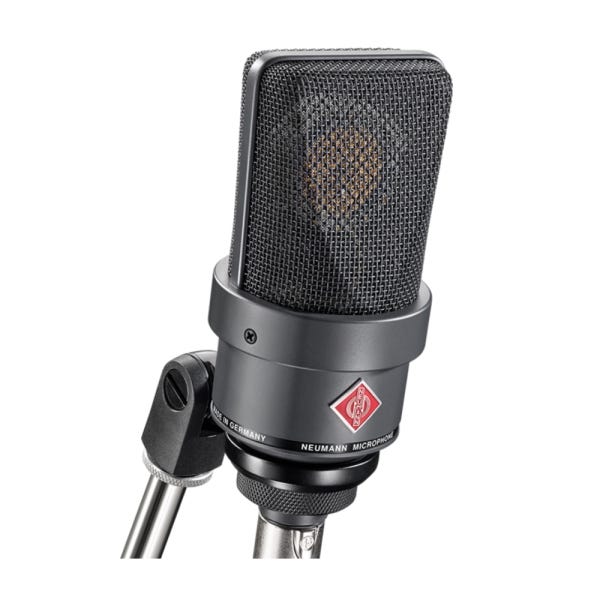
The Neumann TLM 103 mt is a large-diaphragm condenser microphone built as a budget-friendly alternative to the legendary U 87, giving project studios, producers, and vocalists access to classic Neumann sound without the flagship price tag. It uses a capsule derived directly from the U 87's design, paired with modern transformerless circuitry that keeps the signal clean, direct, and true to the source. This mic handles sound pressure levels up to 138 dB without distortion while maintaining an extremely quiet self-noise rating of just 7 dBA, a combination that makes it usable on nearly anything from a whispered vocal to a loud snare drum. That kind of range matters most to home and project studio owners who don't have the luxury of swapping microphones for every source that walks through the door. Its compact body is easy to position in tight spaces, whether that's over a snare, inside a kick drum, or up close on a small guitar amp, without the bulk that larger studio mics can present. This makes it a practical workhorse rather than a specialist tool limited to one type of session. The TLM 103 mt ships complete with a swivel mount and a wooden storage box, so it arrives ready to set up in the studio without needing extra accessories or aftermarket hardware. For anyone building out a primary vocal or instrument mic without University-level studio budgets, this model offers a clear, reliable starting point.
A More Affordable Path to U 87 Style Sound
Introduced in 1997 as a lower-cost alternative to the U 87, the TLM 103 has since earned its own reputation as a studio standard rather than simply a budget substitute. Its tapered headgrille design gives it an immediately recognizable Neumann look, instantly identifying it among other studio condenser microphones on a stand or in a rack. Its sonic character has become a reference point that other contemporary studio microphones are often compared against, a rare distinction for a mic originally positioned as an affordable option. The capsule inside is based on the classic K67/87 design used in the U 87, giving the TLM 103 a strong family resemblance in tone while adding a slightly more modern voicing. This means engineers get a taste of the U 87's tonal DNA without needing to source or maintain a vintage or flagship-tier microphone. It's a practical choice for studios that want that recognizable Neumann character across multiple mic positions without multiplying their budget for each one. Nearly three decades after its introduction, it remains one of the most recommended studio condensers in its price class.
Presence and Tone Built for Cutting Through a Mix
The TLM 103 carries a wide presence boost above 5 kHz, giving vocals and solo instruments a direct, refined quality that helps them sit forward in a mix without extra processing. This built-in lift reduces the need for aggressive EQ moves later in the mixing process, since the microphone is already doing some of that tonal shaping at the source. It retains the authoritative midrange that has become a signature trait across Neumann's microphone lineup, a quality that has made the brand a long-standing favorite in professional studios worldwide. Alongside that midrange strength, the TLM 103 delivers a deep yet controlled low end, which suits deep or resonant voices as well as bass-heavy instruments needing accurate low-frequency reproduction. Engineers recording baritone or bass vocalists in particular tend to notice how well this mic handles the lower register without turning muddy or boomy. The result is a microphone that sounds full and present without becoming harsh, whether it's used on speech, singing, or acoustic instrumentation. That balance of clarity and warmth is a major reason the TLM 103 remains popular across such a wide range of source material.
Technical Specs Built for Quiet, Clean Recording
With a self-noise rating of only 7 dBA, the TLM 103 ranks among the quietest microphones available at any price point, which matters when capturing subtle or dynamic performances where unwanted hiss would otherwise be audible. Its high sensitivity rating of -32.5 dBV helps maintain a strong, low-noise signal even when paired with budget preamps, entry-level audio interfaces, or older tube gear that might otherwise introduce noise into the chain. This makes the mic forgiving for home studio setups where the rest of the signal chain isn't top-tier professional gear. Despite that sensitivity, the mic still handles sound pressure levels up to 138 dB without requiring a pad or pre-attenuation, giving it a dynamic range of 131 dB overall. That range means the same microphone can capture a soft spoken line and a loud bass drum hit without distortion or added noise, all without needing to switch microphones between takes. For engineers juggling multiple source types in a single session, that flexibility saves both time and equipment costs. Few microphones in this price range offer this combination of low noise floor and high headroom in a single package.
Transformerless Design for an Uncolored Signal
As part of Neumann's TLM series, this microphone uses a transformerless output stage that minimizes transmission losses and keeps the sound immediate and uncolored, closely reflecting the original source. This design choice also supports strong, clear bass response even at high signal levels, avoiding the low-end breakup that can occur in microphones with transformer-based outputs under heavy signal. For engineers who value accuracy and a direct relationship between the performance and the recorded signal, this circuitry is a core part of what makes the TLM 103 sound consistent across a wide range of sources and volumes. It also contributes to the mic's resistance against unwanted coloration when driven hard, which matters on loud sources like drums or amplified instruments. This consistency from quiet to loud passages is part of what allows the TLM 103 to function as a genuine all-purpose studio microphone rather than a specialist tool.
Everyday Uses in the Studio and Beyond
While originally developed for project studios and broadcast applications, the TLM 103 quickly found its way into professional studios as a modern-sounding alternative to the U 87 for speech, vocals, drums, guitar amps, and piano. Broadcasters in particular appreciate its combination of low self-noise and forward presence, since spoken word recording benefits from both clarity and intimacy. It's also a common choice as a spot microphone in classical recording sessions, particularly on cello and double bass, where its low-end depth and clarity serve the instrument well. Engineers recording chamber ensembles often reach for the TLM 103 specifically because of how naturally it renders low string instruments without needing additional low-end EQ. This range of use cases reflects a microphone that performs reliably across genres and applications rather than being limited to a single specialty. From a solo podcaster to a classical recording engineer, the same microphone can serve very different roles convincingly.
Who Should Consider This Microphone
The TLM 103 mt is a strong fit for producers, vocalists, broadcasters, and studio owners who want Neumann's signature tonal character without committing to the cost of a flagship model like the U 87. Anyone recording vocals, drums, guitar amps, piano, or classical strings will benefit from its combination of low self-noise, high SPL handling, and forward, present tone. It's especially useful for engineers who need a compact, easy-to-position microphone that still delivers a professional, studio-grade sound across a wide variety of recording situations. Home studio owners looking to make their first serious microphone investment will find this a dependable long-term choice rather than something they'll outgrow quickly. Given its versatility across speech, vocals, and instruments, it also works well as a single go-to mic for smaller studios that can't justify owning several specialized microphones. For anyone weighing sound quality against budget, the TLM 103 mt represents one of the more efficient ways to get genuine Neumann character into a recording space.