Bridge The Gap Between AES/EBU And S/PDIF Digital Audio
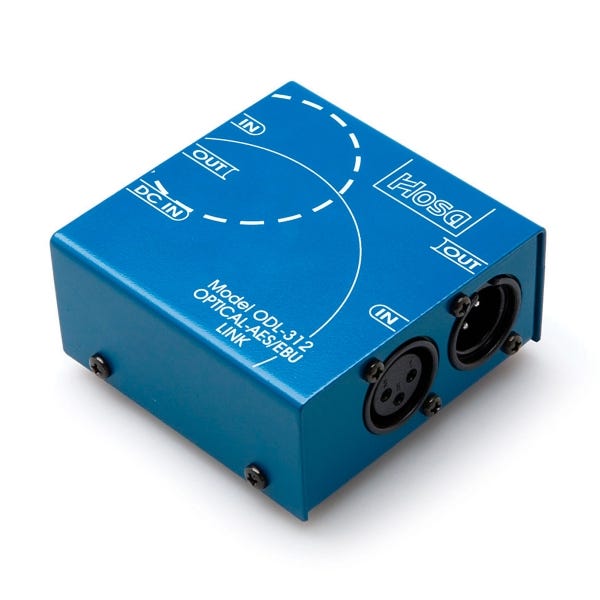
This is the Hosa ODL-312, a Digital Audio Interface built to convert between S/PDIF Optical and AES/EBU digital audio formats. It's an inexpensive, high-quality digital link that solves a genuinely common problem in studio environments, where one piece of gear only offers S/PDIF connectivity while another only accepts AES/EBU, or vice versa. If your DAW, sound card, or DAT recorder uses a different digital audio standard than the equipment you need to connect it to, this interface handles that conversion directly without forcing you into an expensive workaround.
Solving A Common Digital Connectivity Mismatch
Some manufacturers build their DAWs, sound cards, or DAT recorders with only S/PDIF outputs, while others offer only AES/EBU inputs, creating a genuine compatibility gap between equipment that otherwise might work together perfectly well. This interface offers a simple, direct solution for making transfers between those two standards without needing to leave the digital realm entirely and fall back on an analog connection as a workaround. For studios and engineers working with a mix of gear from different manufacturers and different eras, that kind of format mismatch comes up more often than most people expect, and having a dedicated solution on hand avoids the compromises that come with converting to analog and back just to bridge the gap.
Simultaneous Two Channel Transfer In Either Direction
This unit allows simultaneous transfer of two channels of digital audio in either or both directions at once, between AES/EBU on XLR connectors and S/PDIF on TosLink optical. That bidirectional capability means the same unit can convert AES/EBU to S/PDIF, S/PDIF to AES/EBU, or handle both conversions happening simultaneously if a particular setup calls for it. Having that flexibility built into a single unit means engineers don't need separate hardware depending on which direction the conversion needs to run, simplifying what could otherwise be a more complicated equipment list for a studio dealing with mixed digital formats.
Staying In The Digital Realm Without Resampling
One of the most important aspects of this interface is that tracks remain entirely in the digital realm throughout the conversion process, with no resampling required to move between formats. That matters enormously for audio quality, since resampling or converting a digital signal through an analog stage introduces the potential for signal degradation and quality loss that a purely digital-to-digital conversion avoids entirely. For engineers who care about preserving the exact fidelity of a digital recording through every stage of a signal chain, having a conversion tool that never touches the analog domain is a meaningful guarantee that the original digital audio integrity stays fully intact.
Serial Copy Management System Behavior
It's worth noting that the Serial Copy Management System, a copy protection scheme built into certain consumer digital audio formats, is disabled when transferring from optical S/PDIF to AES/EBU through this interface. That behavior matters for professional and studio applications where SCMS restrictions, originally designed for consumer digital audio copying, would otherwise interfere with legitimate professional recording and transfer workflows. Engineers working in a professional context benefit from that behavior, since it removes a restriction that was never really intended for the kind of professional digital audio work this interface is built to support.
An Inexpensive Solution For A Genuinely Useful Function
This interface is specifically positioned as an inexpensive connectivity solution, giving studios and engineers an affordable way to solve a digital format mismatch without needing to invest in an entirely new piece of expensive equipment just to gain compatibility. That affordability matters for smaller studios or engineers working on a budget, where the cost of format incompatibility could otherwise mean either replacing perfectly good equipment or accepting a lower-quality analog workaround. For anyone facing this exact AES/EBU to S/PDIF mismatch, having a low-cost, purpose-built solution removes a real financial barrier to solving what would otherwise be a frustrating compatibility problem.
Why A Dedicated Digital Interface Matters For Studio Compatibility
Digital audio format incompatibility between pieces of studio gear is a persistent, recurring issue given how many manufacturers have historically standardized on different digital connection formats for their equipment. This interface exists specifically to solve that problem cleanly, preserving full digital audio quality while giving engineers the flexibility to connect gear that otherwise wouldn't be compatible. For any studio running a mix of equipment built around different digital audio standards, having a dedicated, reliable conversion tool like this removes compatibility as an ongoing source of frustration in day-to-day studio operation.