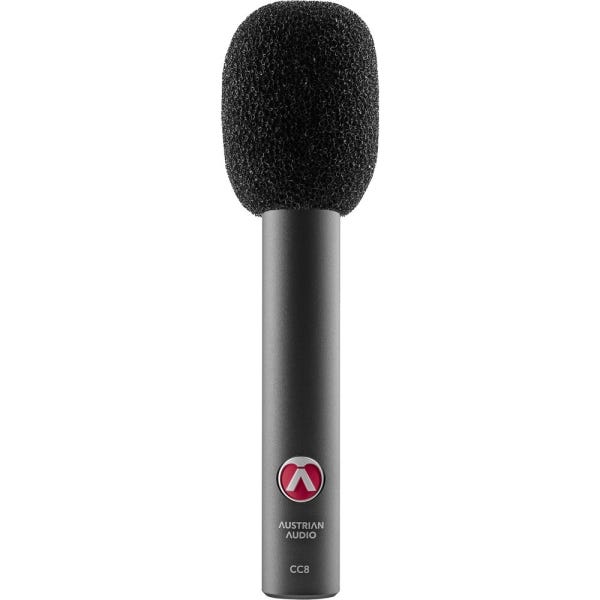
Small-Diaphragm True Condenser Microphone, OCC7 Cardioid Capsule, Transformerless Output, 156 dB Max SPL, Switchable 60/120 Hz Low-Cut, -10/-20 dB Pad, Factory-Matched to +/- 0.5 dB, Handcrafted in Vienna
The Austrian Audio CC8 is a small-diaphragm cardioid true condenser microphone built around the newly developed OCC7 capsule and a transformerless output stage. It captures fast transient sources, drum overheads, acoustic guitar, piano, and orchestral instruments, with a natural midrange and open, unforced top end. Every CC8 is handcrafted and measured in Vienna, Austria, and factory-matched to within half a decibel, so the mic you buy performs exactly like the reference. This is the pencil condenser you reach for when you want the recording to sound like the instrument in the room, not a colored version of it.
At the heart of the CC8 sits the OCC7 small-diaphragm true condenser capsule, a modern reinterpretation of the classic CK1 design that engineers have trusted on acoustic sources for decades. A true condenser capsule uses a permanently charged backplate and an ultra-thin diaphragm that reacts almost instantly to changes in air pressure, which is why it resolves the fast attack of a hi-hat or a plucked string so cleanly. The cardioid polar pattern rejects sound arriving from the rear, helping you isolate one instrument in a busy tracking room. For anyone recording acoustic instruments, that combination of speed and focus is exactly what makes a small-diaphragm condenser the tool of choice.
The CC8 uses a transformerless output stage, which means the audio signal reaches your preamp without passing through an output transformer that can add coloration or smear transients. The result is a remarkably linear frequency response from 20 Hz to 20 kHz and a signal that stays faithful to the source even under heavy processing later in the mix. Transformerless designs are prized in critical recording because they keep phase relationships intact, an essential quality when you are running a matched stereo pair. If you are stepping up from an entry-level condenser, this is the upgrade you hear immediately in the clarity of cymbals and string harmonics.
With a maximum SPL of 146 dB, or 156 dB with the pad engaged, the CC8 handles sources most pencil condensers cannot survive. Max SPL is the loudest sound a microphone can take before its output distorts, and a 156 dB ceiling means you can place the CC8 right on a snare, a brass bell, or a screaming guitar cabinet without fear of clipping. This headroom lets you commit to close-miking loud transient sources that define the energy of a drum kit or a horn section. For the tracking engineer, it removes the guesswork of wondering whether the capsule can take the hit.
The CC8 posts an equivalent noise level of just 16 dB(A), delivering the inky-black silence between notes that reviewers consistently single out. Self-noise is the tiny electronic hiss a microphone generates on its own, and a low figure like this means quiet passages, decaying piano notes, delicate fingerpicking, stay clean instead of drowning in a wash of hiss. That matters most on intimate acoustic recordings and orchestral work, where the space around the notes is part of the performance. Buyers who record classical or ambient material will hear the difference the moment they solo a quiet track.
A switchable low-cut filter offers 60 Hz and 120 Hz second-order settings, and a switchable pad provides -10 dB and -20 dB of attenuation right at the microphone. The low-cut tames stage rumble, footfalls, and proximity buildup before they ever reach your preamp, while the pad lets the mic handle the loudest sources without overloading sensitive front ends. Having these controls on the mic body means you shape the tone at the source rather than fixing it in the mix. For a live or studio engineer juggling a full kit of overheads and spot mics, that is real time saved and cleaner tracks captured.
Every CC8 is factory-measured and matched to within +/- 0.5 dB of sensitivity at 1 kHz, which means any two units behave as a coherent matched pair without hand-selecting. Matched sensitivity is what makes stereo techniques like XY, ORTF, and spaced pairs produce a stable, believable image instead of a lopsided one that pulls to one side. This tight tolerance is a genuine advantage for engineers who build their mic locker one piece at a time and later want a stereo array. Add a second CC8 down the road and you have a true stereo rig, no compromises.
The CC8 is at home on drum overheads and hi-hat, acoustic guitar, piano and stringed instruments, woodwinds, brass, and orchestral percussion, in the studio or on stage. First-time buyers get a forgiving, natural-sounding mic that flatters real instruments, while seasoned engineers get a repeatable, matchable tool that earns a permanent spot in the locker. Reviewers have called it a future classic for its focused, musical midrange and its performance well beyond its class. Whether you are tracking a single acoustic guitar or building a full overhead array, the CC8 is the pencil condenser that makes the source sound like itself.
| MPN | CC8-D |
|---|---|
| Color | Black |
| Element | Condenser |
| Pattern | Cardioid |
| Power Source | Phantom Power 48V |
| Size | 5.5 x 0.9 x 0.9 in (140 x 23 x 23 mm) |
| Form | Condenser Microphone |
| Output | XLR 3-pin |
| Channels | Mono |
| UPC / EAN | 810019100208 |
| Brand | Austrian Audio |
| Product Condition | New |
| Availability | Out of Stock |

| Type | Small-Diaphragm True Condenser |
| Capsule | OCC7 (inspired by the classic CK1) |
| Polar Pattern | Cardioid |
| Frequency Range | 20 Hz - 20 kHz |
| Sensitivity | 15 mV/Pa |
| Self-Noise | 16 dB SPL(A) |
| Max SPL | 146 dB SPL (156 dB SPL with pad) |
| Low-Cut Filter | 60 Hz / 120 Hz (2nd order) |
| Pad | -10 dB / -20 dB |
| Impedance | 275 Ω (symmetrical) |
| Power | 48 V phantom (< 3 mA) |
| Connector | XLR 3-pin |
| Origin | Handcrafted in Vienna, Austria |